Ten days. That's what we needed to explore parts of the Andes and the Ecuadorian Amazon starting from Cuenca, and for me (Pedro) it meant something special: it was the first time Karyna set foot in my country, and I wanted her to see it at a relaxed pace, not as a quick tourist passing through.
Ecuador is small on the map but deceptive when it comes to distances, because in just a few hours of driving you go from a 4,000-meter icy páramo to the most humid Amazon rainforest. We had already been in the country for about a month, on family vacation, but we decided to set aside six days to visit the places I love most in Ecuador, the ones I had been wanting to show Karyna for years. And I would go back again anytime.
📋 What you'll find in this post
Cuenca, my city
Cajas National Park
Ingapirca, the Inca and Cañari ruins
Pumapungo Museum
Baños and Puyo, the gateway to the Amazon
Quilotoa, the volcano with a lagoon
Back to Cuenca
Tips from Pedro and Karyna
Frequently asked questions
Cuenca, my city
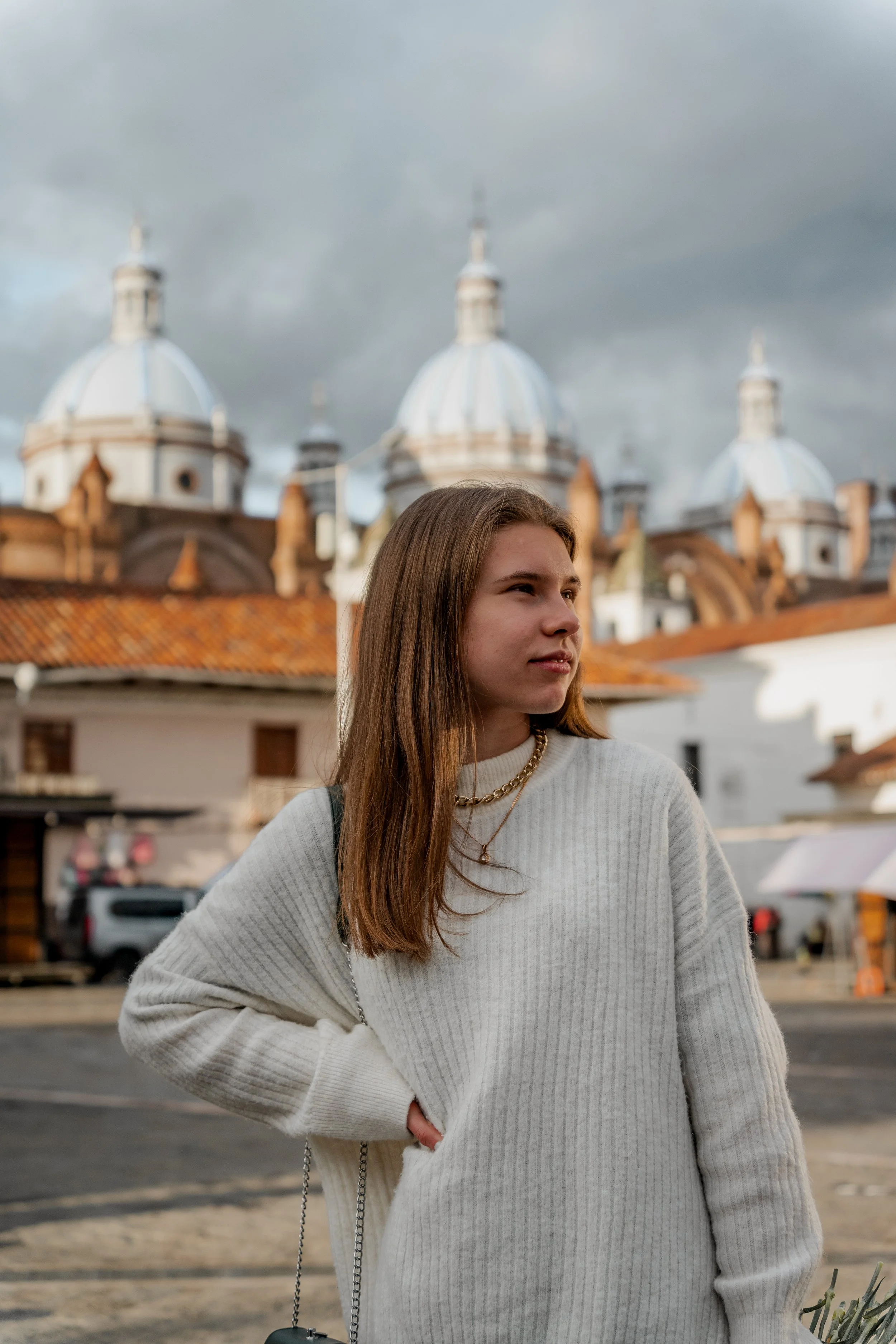
We started where we had to start: Cuenca. It's the city where I grew up, and I wanted Karyna to walk the historic center with the same calm I've always felt walking it, to explore the linear parks along the 4 rivers that run through Cuenca, and to feel at home.
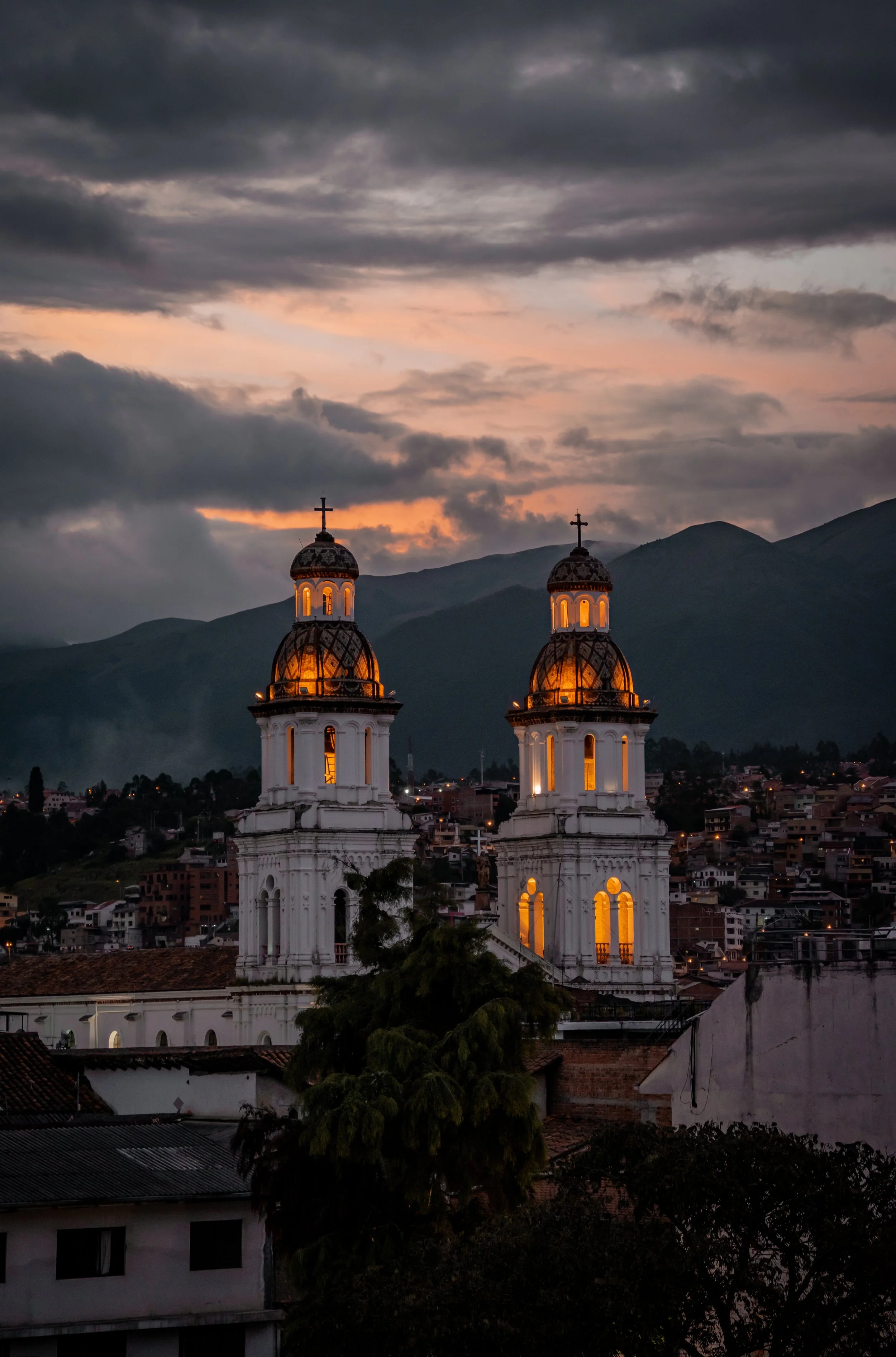
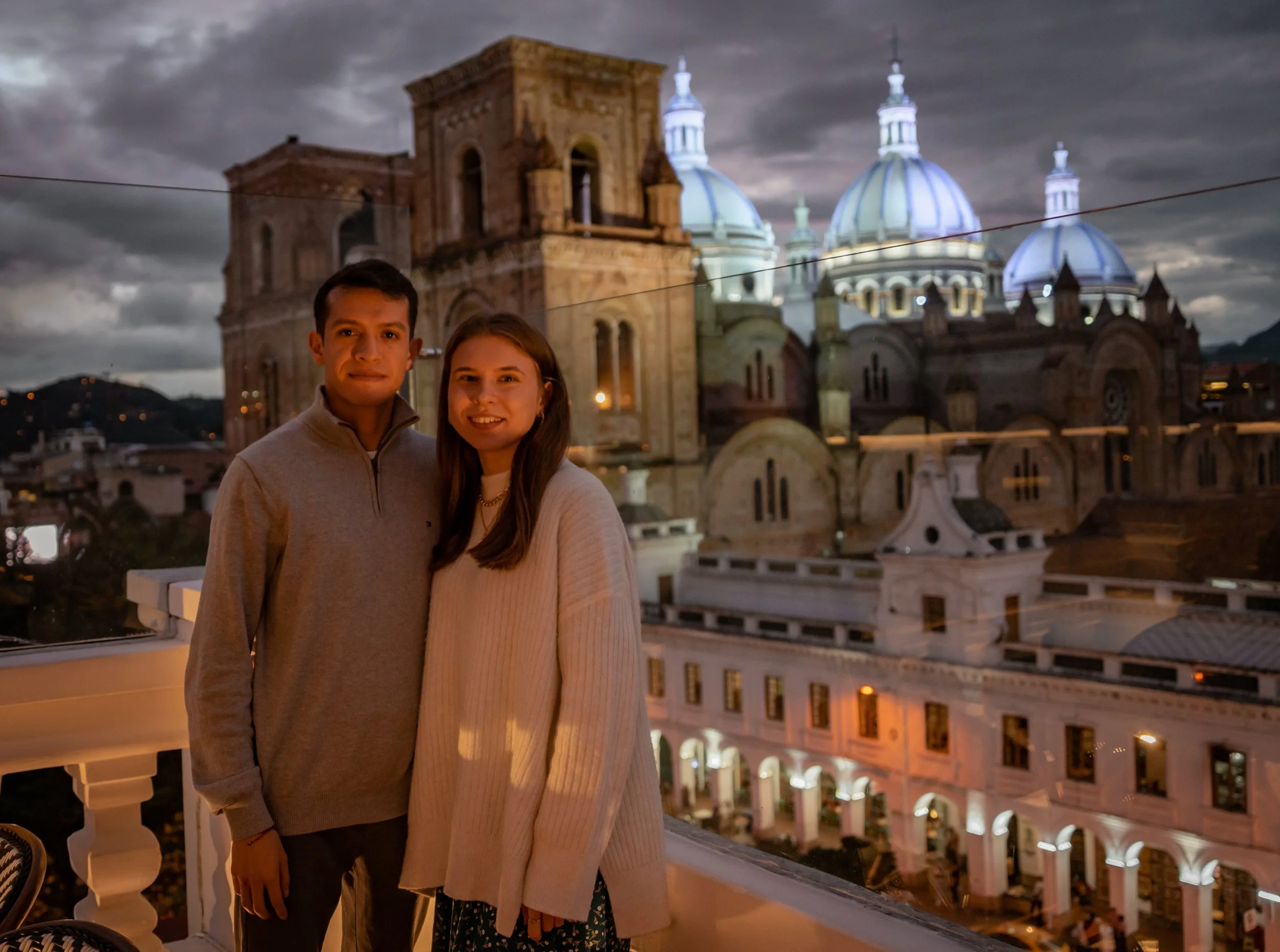
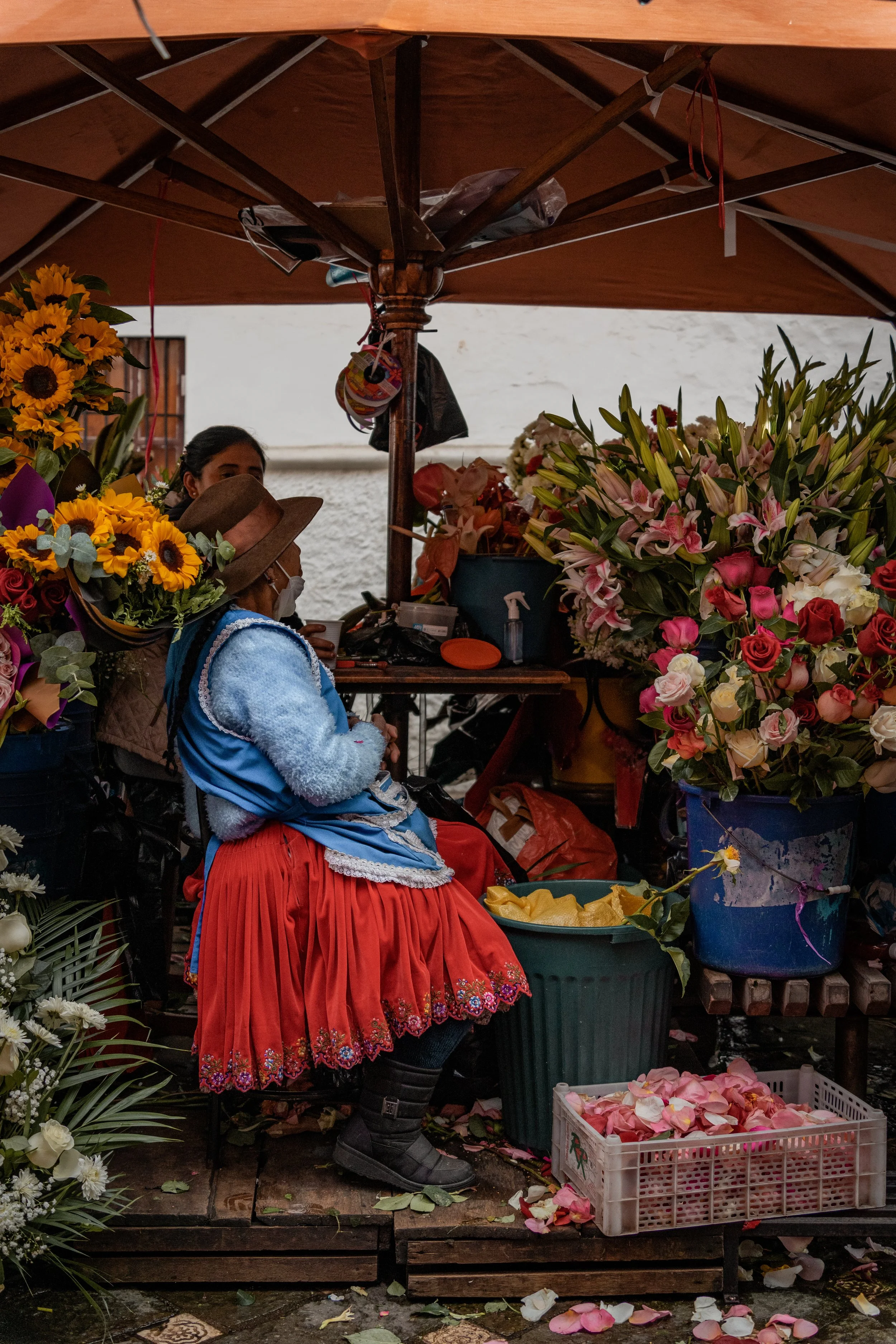
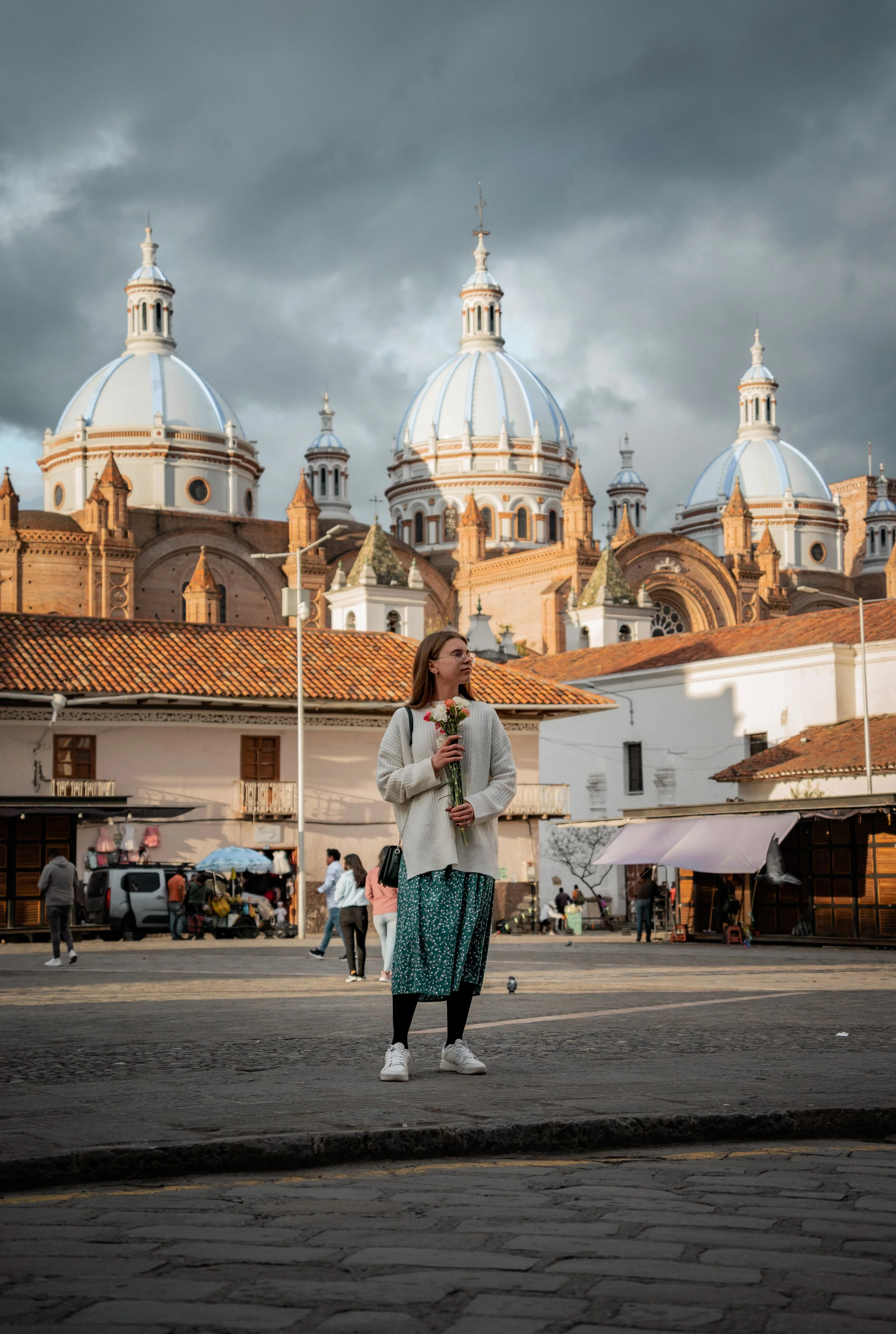
We walked between the New Cathedral, with its blue domes visible from much of the center, and the Old Cathedral, much smaller and simpler, right next to it. We passed by Plaza de las Flores, always full of real flower stalls (that's where the name comes from), and Plaza San Francisco, with its crafts market. One evening we went up to a rooftop with views of Parque Calderón, and that's when Karyna understood why Cuenca is called the Athens of Ecuador, even if the nickname sounds a bit exaggerated.
We also visited the Turi lookout, where you get a view of the whole city and can clearly see how much it has grown recently.
You don't need to book anything for this. It's a city made for getting lost on foot, stopping to eat something on any corner and letting the hours slip by.
As for food, we tried everything: cuy, papas con cuero, sánduche de pernil, mote pillo and many more. Without a doubt, the food in Ecuador is spectacular.
Another must-do was the markets. In this case we went to 10 de Agosto, the one my mom and grandmother have always gone to, and where the people are very friendly. Karyna was amazed by the amount of fruit and the variety of products. We also checked out the food court where the chanchos hornados are on display. For me it didn't seem unusual at all, but I understand that for someone from outside it's quite a novelty.
Cajas National Park
Less than an hour from Cuenca is Cajas, a national park at almost 4,000 meters above sea level full of glacial lagoons. We went by car with my friends, but if not, there are also buses from the bus terminal for $2, and in just under an hour we were at Toreadora Lagoon, the most accessible one, which has the main viewpoint right at the entrance.
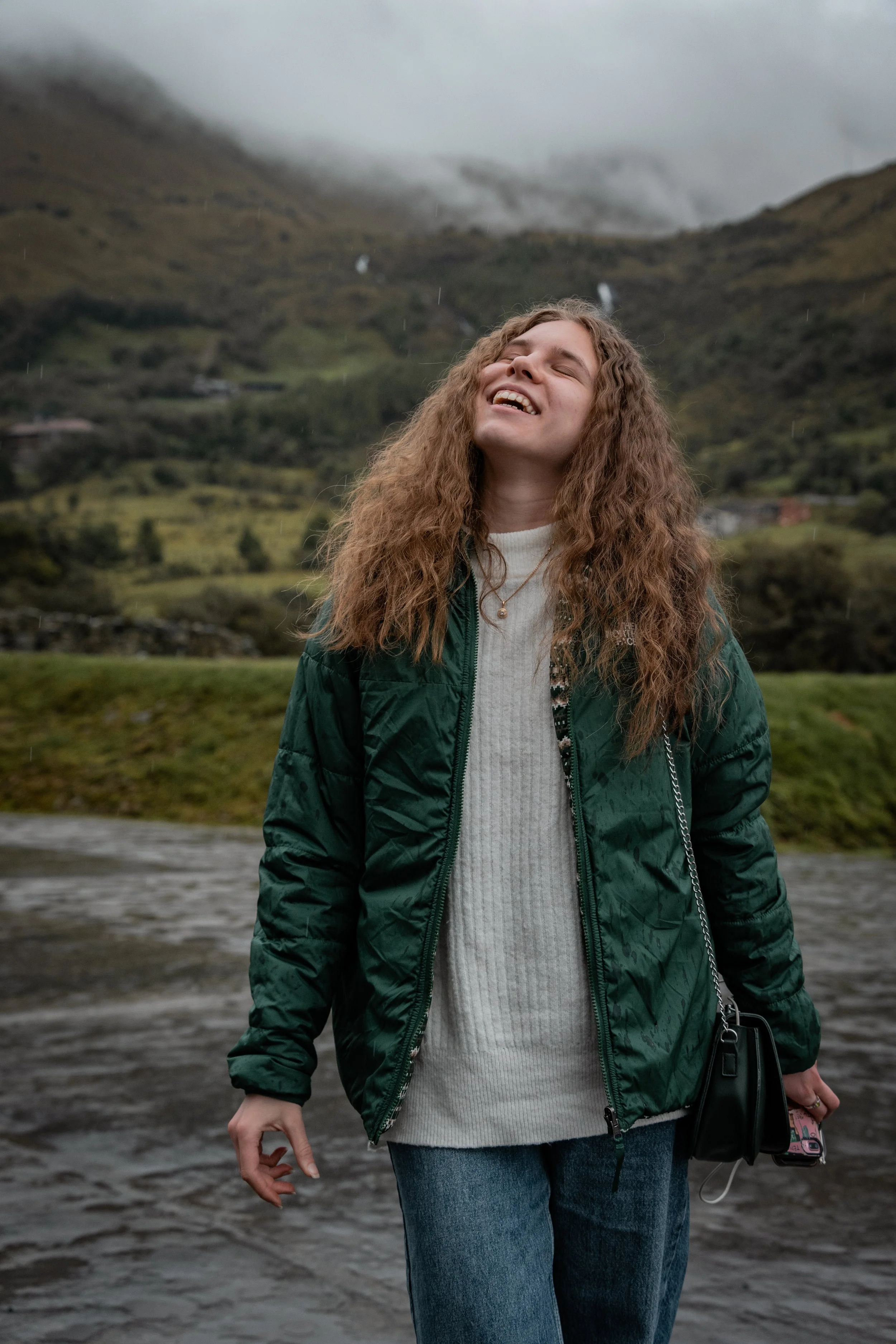
Entry to the park is free, something I still find incredible, although it can have downsides, like anyone being able to come in and leave a mess. Opening hours are 8:00 to 16:30. We did the short loop around Llaviucu Lagoon, about 45 minutes, because the weather started changing fast, as it usually does up there: the sun comes out, it gets warm, and fifteen minutes later it's raining and truly cold. We went in layers, with a mountain jacket, and even so our hands still got cold.
If you go, don't try the longer hikes to the inner lagoons without being acclimatized. The altitude makes itself felt, and there's no rush: Cajas is there to be walked slowly. For Karyna it wasn't easy, since going from sea level to almost 4,000 meters can even be dangerous, but we had already been in Cuenca for a while, so it didn't hit as hard.
Ingapirca, the Inca and Cañari ruins
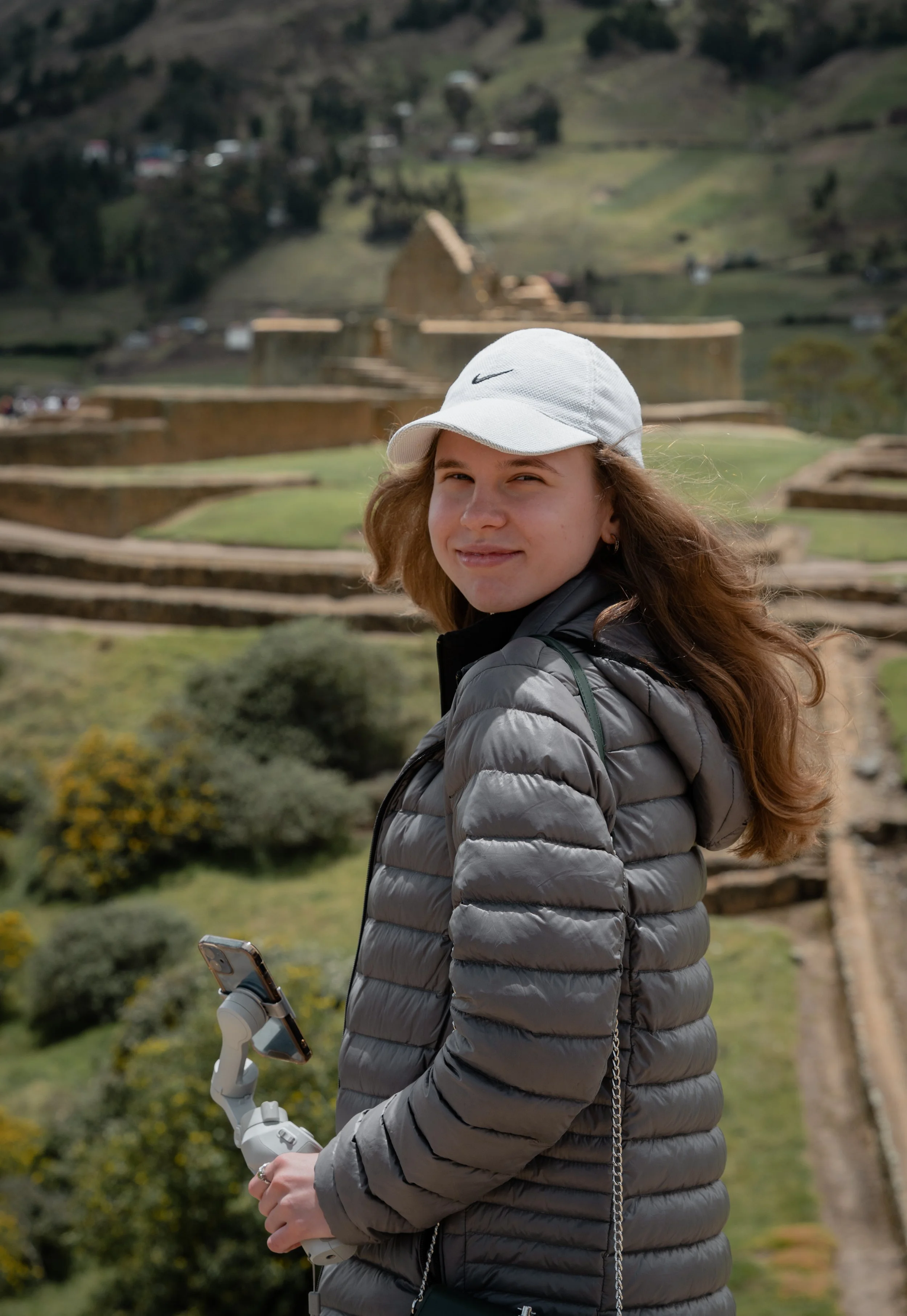
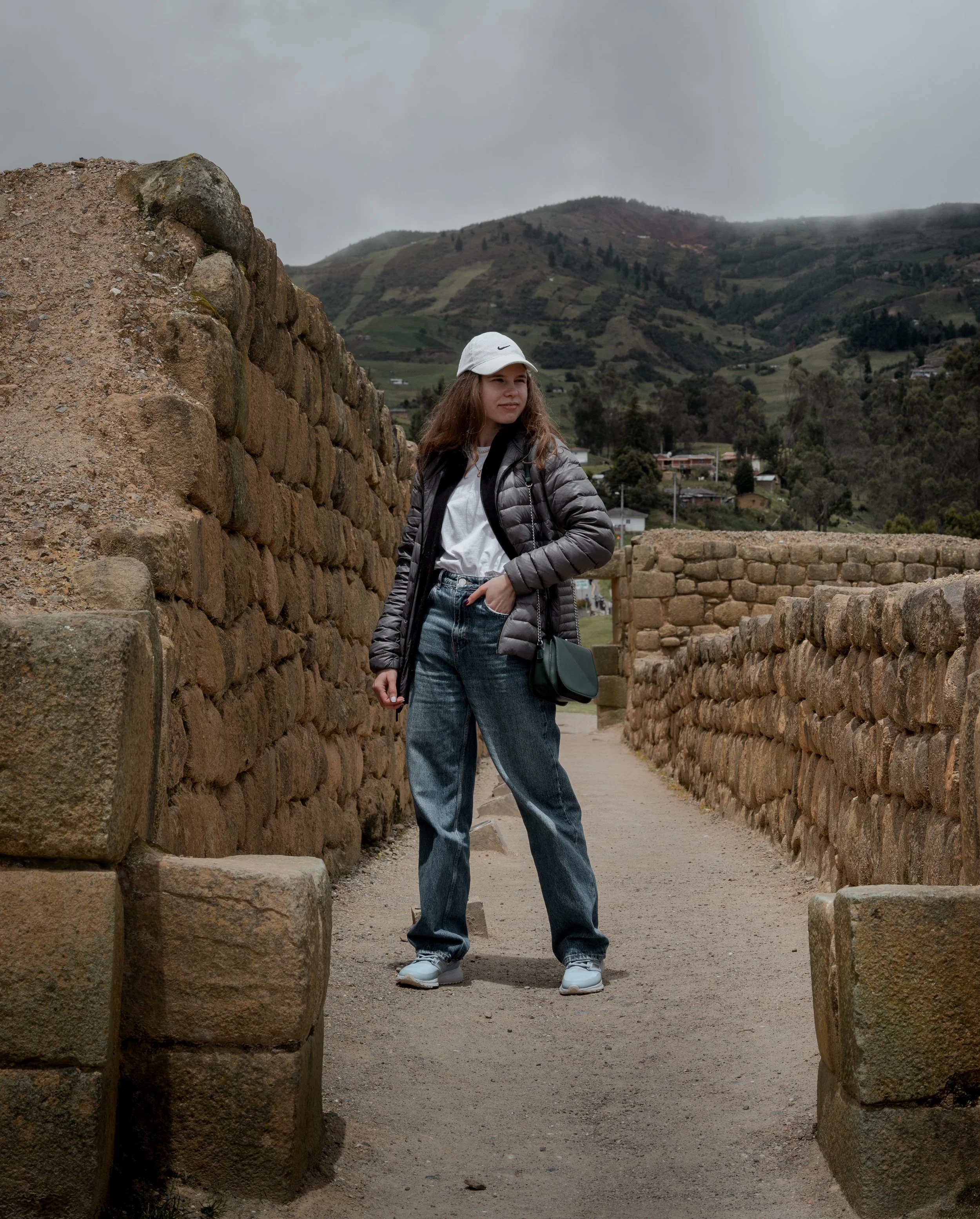
We dedicated one entire day to Ingapirca, the most important archaeological site in Ecuador and the place where Cañari and Inca cultures meet. We drove from Cuenca, about an hour and a half, and the entrance cost us $2 with a guide included, which is mandatory and in Spanish. Here it's a big advantage that Karyna speaks the language lol.
The Temple of the Sun is the highlight of the site: the only circular Inca temple preserved in South America. Our guide explained how the Cañaris already occupied the place before the Incas arrived, and how both cultures ended up living side by side there, something you can see in the mix of construction techniques. You can also visit a small museum with original pieces, including a mummy.
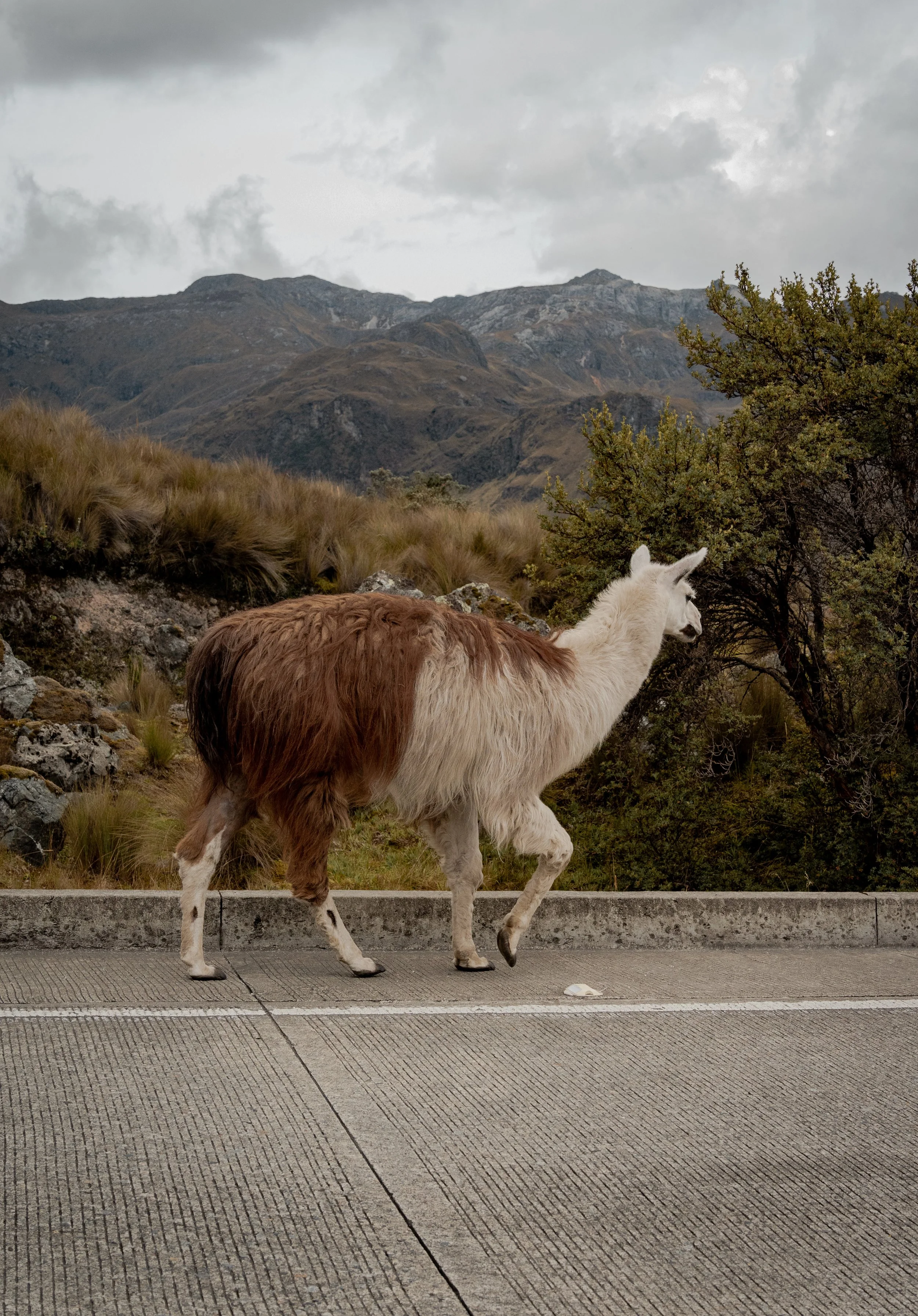
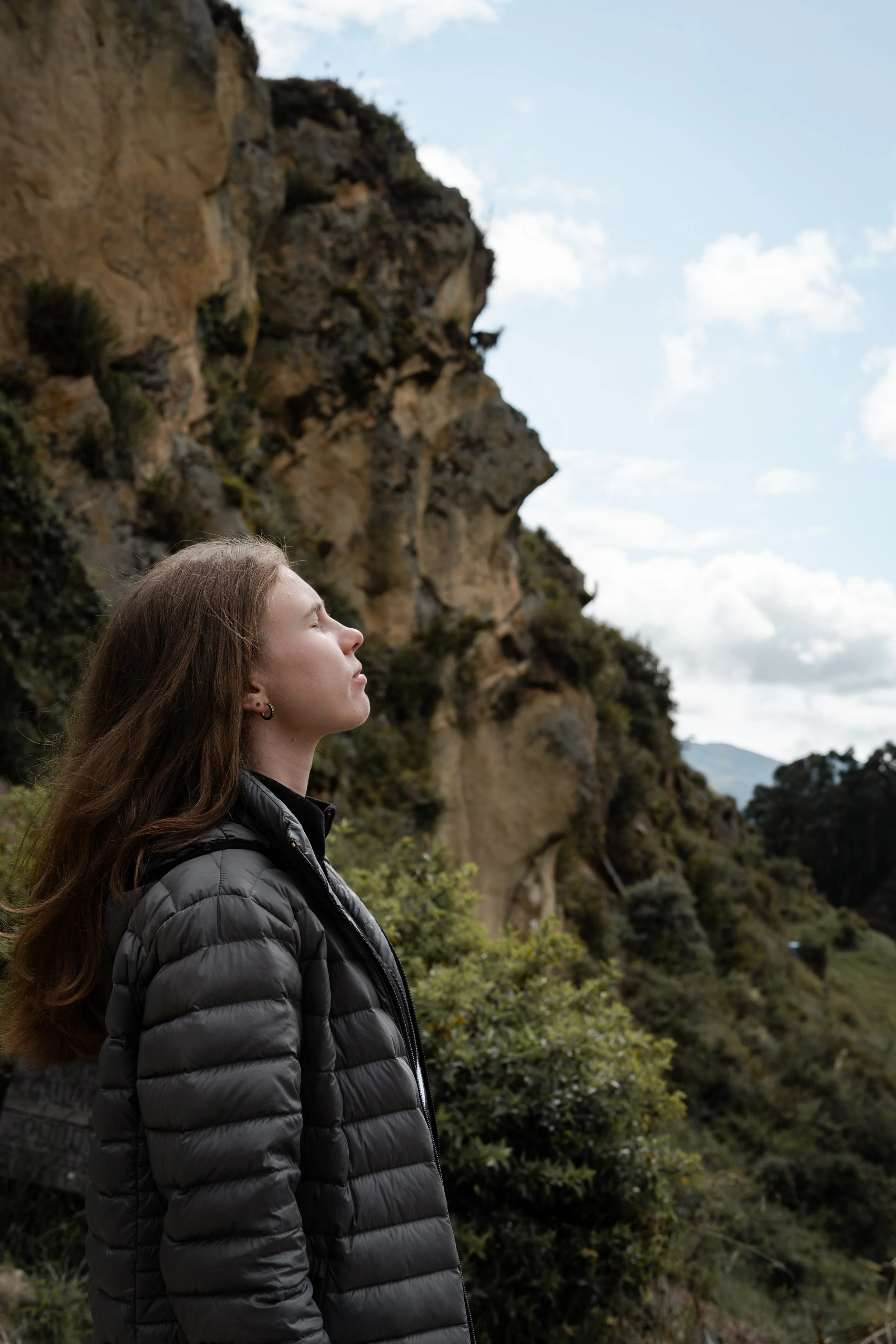
There are also llamas on the grounds, and restaurants serving very cheap and delicious local food. We also took a short walk to see the famous Cara del Inca, a rock shaped like a face. It's said the formation is natural, so it's actually quite curious.
It's at 3,200 meters, so bring water. And generally only cash is accepted: there are no ATMs nearby.
Pumapungo Museum
Another day in Cuenca, we walked along the Barranco until we reached the Pumapungo Museum, which for me is a must-visit if you want to understand why this city was so important to the Incas. The site was called Tomebamba and became the second most important administrative and religious center of the empire, after Cusco.
Entry is free and the museum has several sections: the Inca ruins in the open air, an ethnographic section on Ecuador's Indigenous peoples (with a strong focus on Amazonian communities like the Shuar), an ethnobotanical garden with more than 230 Andean species, and a bird rescue center where we saw up close species I hadn't seen since I left here years ago.
It's one of the few museums where you can spend two hours without even noticing.
Baños and Puyo, the gateway to the Amazon
From Cuenca we headed north towards Baños de Agua Santa, in Tungurahua province (here in Ecuador we simply call it Baños). We stayed there or used it as a base to get around, and from there we went down to Puyo, already in the heart of the Amazon. It's a dramatic change of scenery: in just a few hours you go from cold páramos to humid rainforest, and you can feel it in the air before you see it.
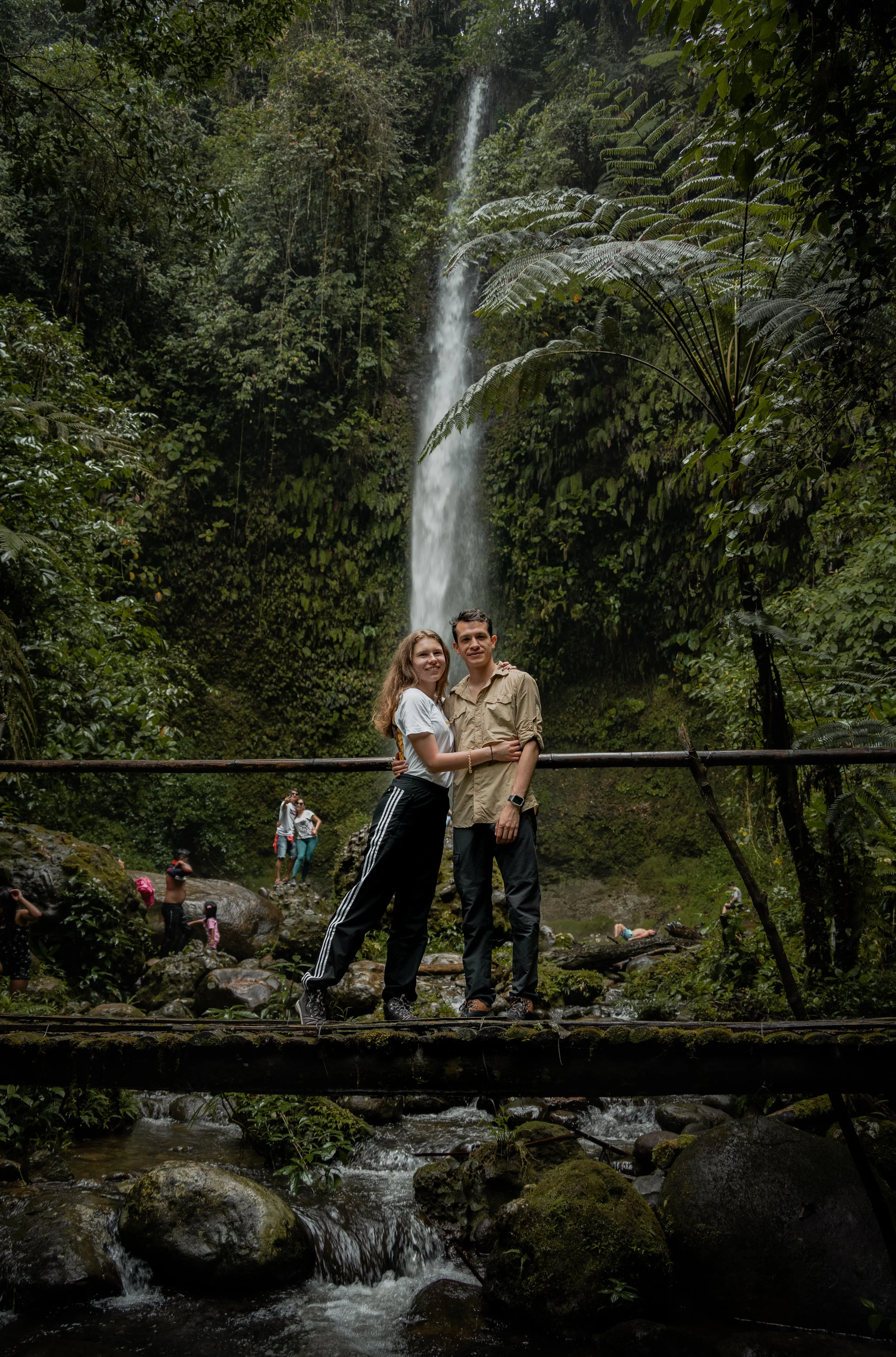
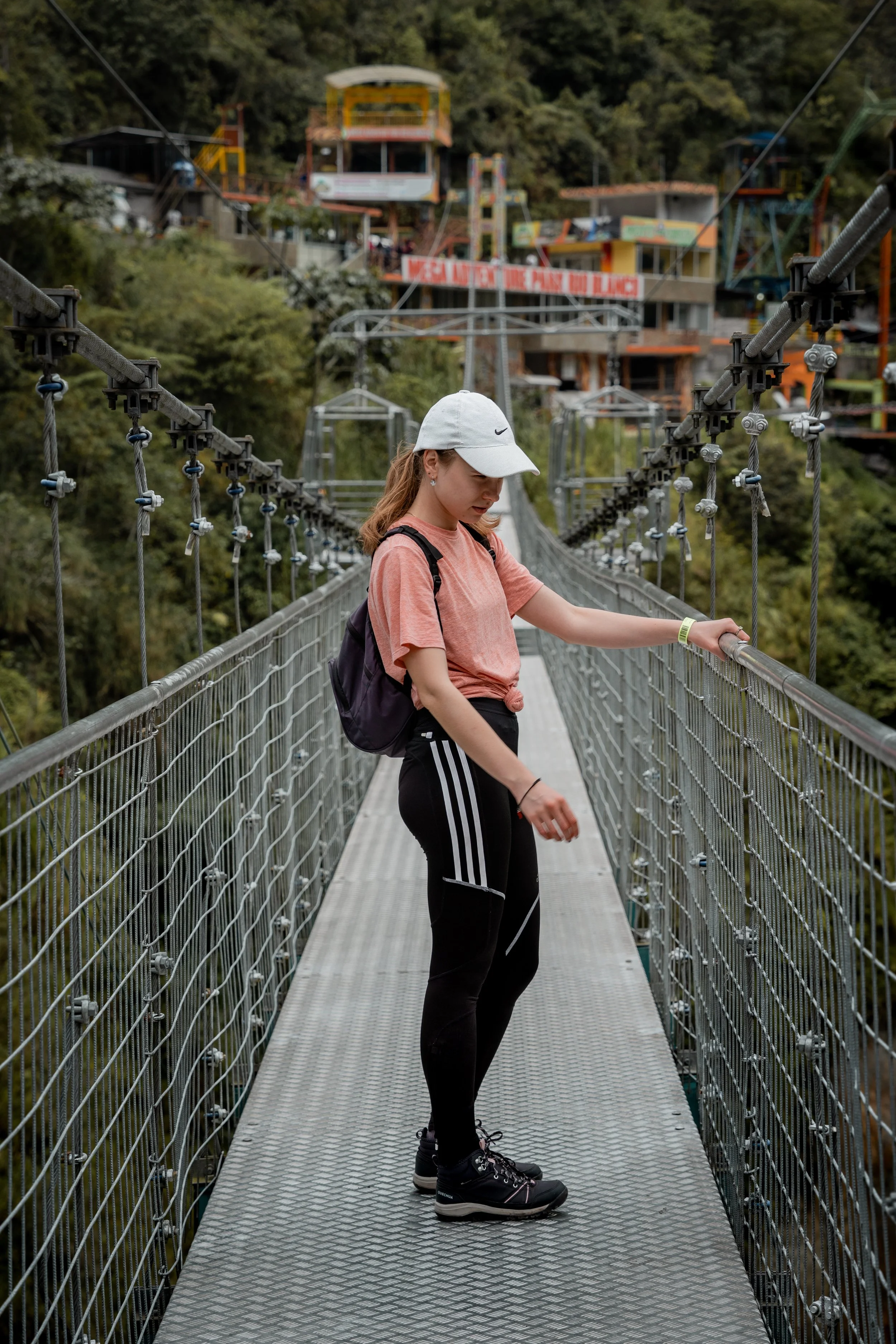
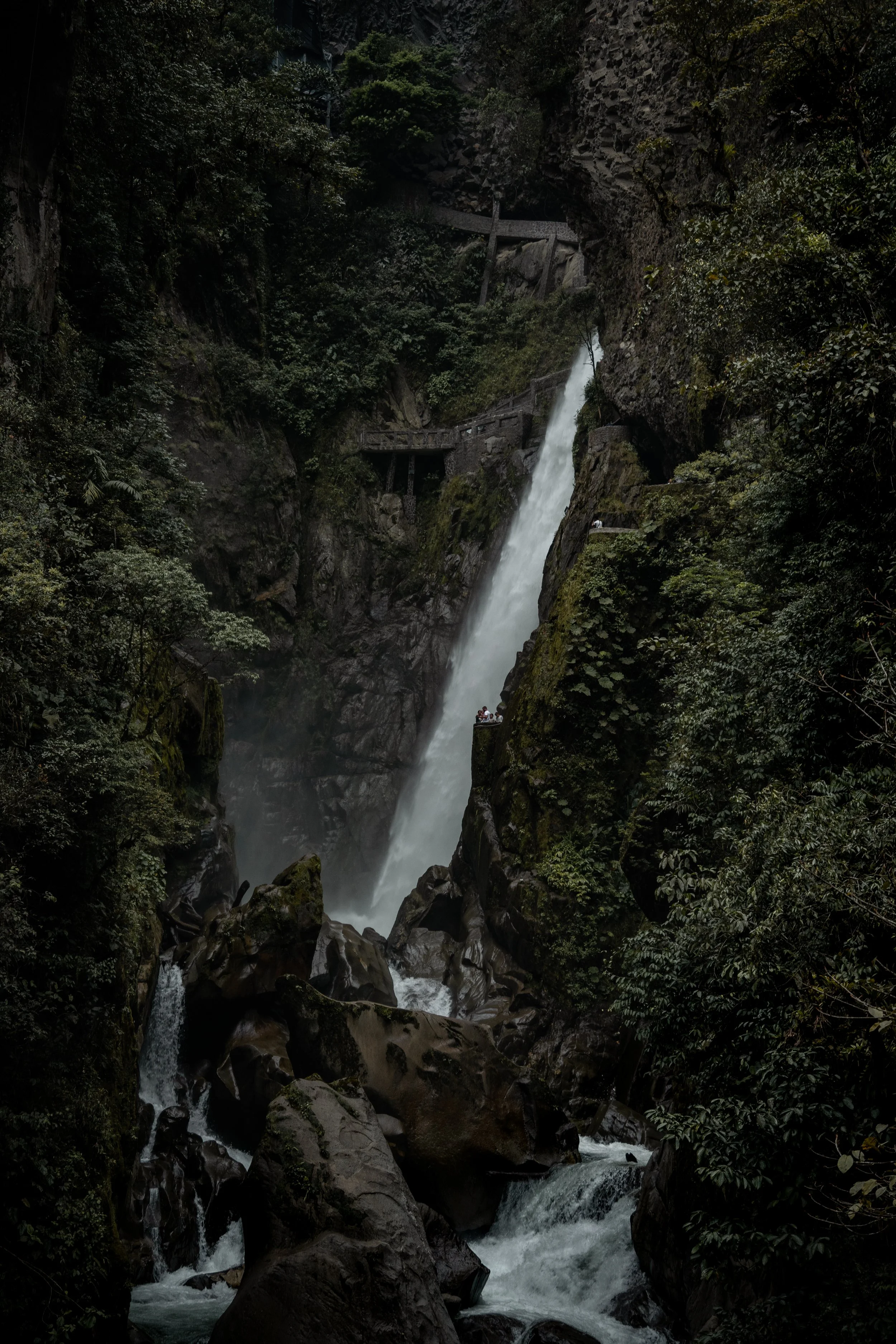
In Baños we visited the Pailón del Diablo, a waterfall about 80 meters tall with a force you can feel just by being near it. Entry costs $2, and there's a trail with stairs carved into the rock that leaves you practically underneath the water. Bring something waterproof, because you'll come out soaked no matter what. Along the way to the Pailón del Diablo there are also several viewpoints overlooking different waterfalls, and it's worth it, since these beautiful landscapes are really interesting to see.
On day 2 in Baños, we went to Puyo, where we took a one-day tour with the Indichuris indigenous community, which directly manages its own lookout over the rainforest, right where the Puyo and Pastaza rivers meet. We paddled a canoe down the Puyo River, with calm stretches and others with stronger current, and we finished by eating local food prepared by the community itself. We also stopped at some waterfalls near Puyo that, without exaggerating, reminded us of the ones so often featured from Bali: the same dense vegetation spilling over the rock, the same impossible green.

Quilotoa, the volcano with a lagoon
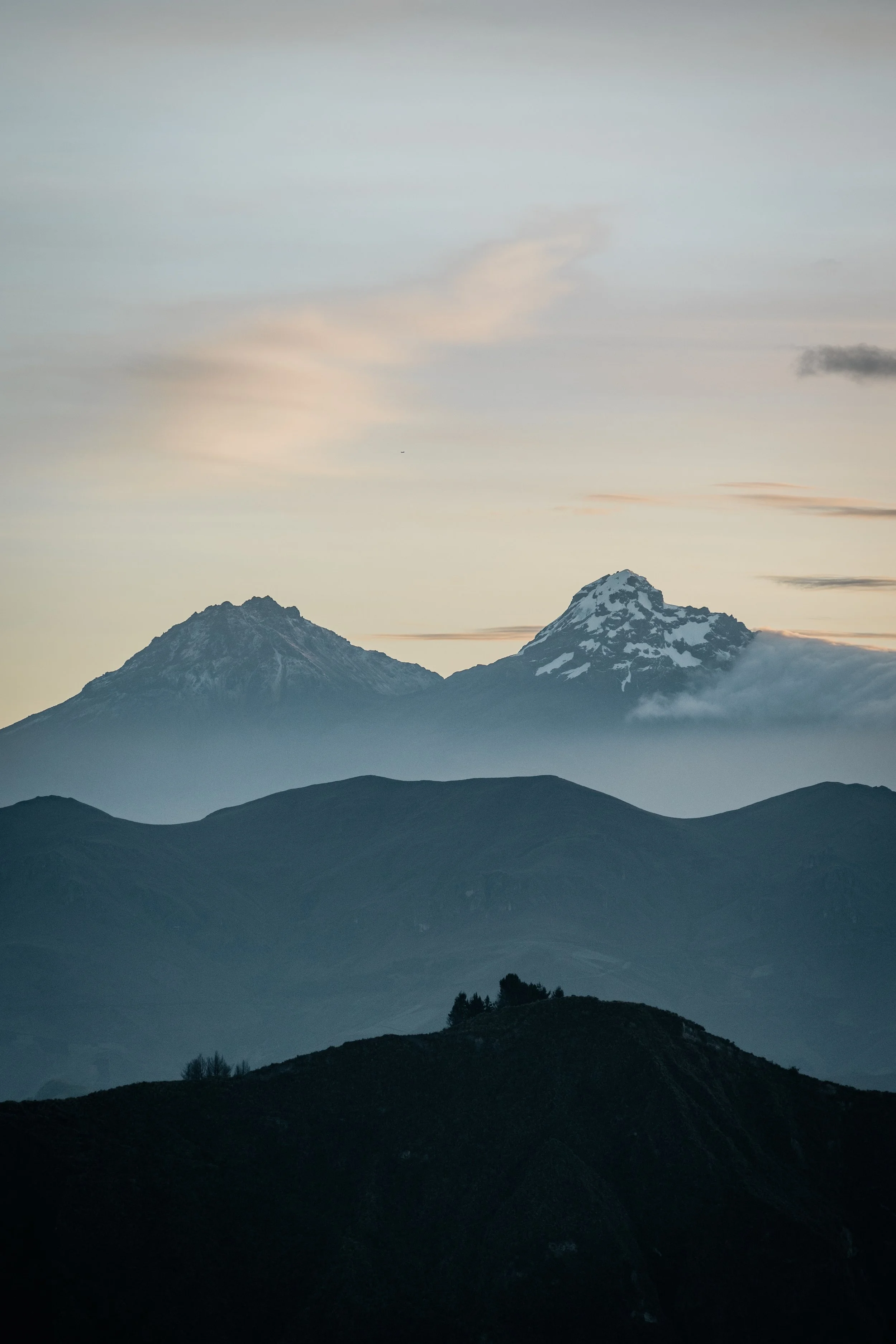
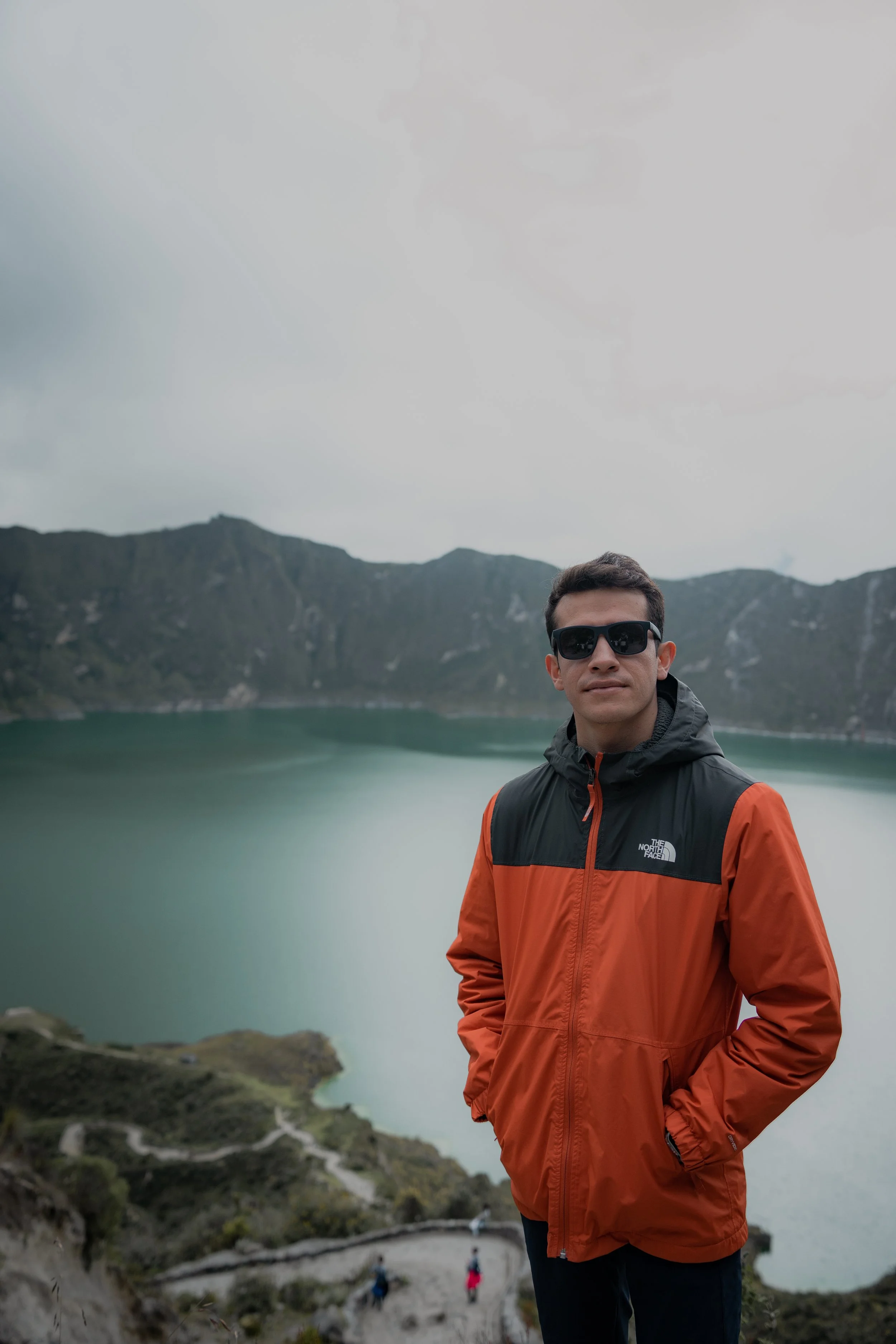
The last stretch before heading back was Quilotoa, an inactive volcano with a turquoise lagoon that looks photoshopped but isn't. On the way we saw Cotopaxi and Chimborazo peeking out between the clouds, two of the country's most famous volcanoes, and that alone is worth the stop.
The lagoon sits at almost 3,900 meters, so the cold bites: between 3 and 15 degrees Celsius depending on the time of day. We walked down to the shore on a trail with no technical difficulty, but going back up is another story. The rain caught us just as we started climbing, so the way back took a long time and the altitude made it tough.
In the town of Zumbahua, at the foot of the volcano, there's a market where you can buy the famous baby alpaca sweaters. We bought two, really warm ones, at a price well below what they cost in any tourist shop in Quito.
Back to Cuenca
We closed the circle by returning to Cuenca to spend our last days before flying back to Valencia. After 10 days of constant movement, those days back in the city, with no plans, eating at the family's home, were the perfect ending. Karyna already knew where I come from. Not just the city: the pace, the food, the way people talk.
💡 Tips from Pedro and Karyna
🚌 Transportation We mostly used our own car, but there are bus options from the Cuenca bus terminal: they're cheap (between $2 and $4 per trip) and leave frequently. For Quilotoa and the Baños/Puyo area, if you're short on time, an organized multi-day tour saves a lot of logistics.
🌡️ Layers, always In a single day we went from the icy 4,000-meter Cajas to the humid 25 degrees of Puyo. Bring a mountain jacket, something waterproof and light clothing, all in the same backpack.
💰 Budget Entry fees to the places we visited are very low: free at Cajas and Pumapungo, $2 at Ingapirca, Quilotoa and the Pailón del Diablo. What weighs most on the budget is guided tours and private transportation, not entrance fees.
🛡️ Safety Cuenca and the central-southern highlands (Cajas, Ingapirca, Quilotoa) are calm areas to travel. The general recommendation is to avoid the coastal provinces and the border areas with Colombia, and in cities always use official taxis.
🧶 Shopping If you're going to buy baby alpaca sweaters, do it in Zumbahua or at local markets in the highlands, not in tourist shops in big cities. You notice it in both the price and the quality.
❓ Frequently asked questions
Is it safe to travel to Ecuador? Yes, especially in the central-southern highlands: Cuenca, Cajas, Ingapirca and the Quilotoa area are calm places. Precaution recommendations focus on specific coastal provinces and border areas with Colombia, not on the route we took.
How many days do you need to explore Ecuador between the highlands and the Amazon? We did this route (Cuenca, Cajas, Ingapirca, Pumapungo, Baños, Puyo and Quilotoa) in 10 days, moving at a fairly fast pace. With 10 to 12 days it's more relaxed, without having to string together transfers every day.
What is the best time to visit Ecuador? It depends on the region: in the highlands, June to September has less rain; in the Amazon, July to November. Since our route combined both areas, there's no perfect month for everything, so be prepared for rain on any leg.
How do you get to Ingapirca from Cuenca? By direct bus from the bus terminal, about an hour and a half, or by private tour. The bus waits about two hours at the site before heading back, which is enough time for the guided visit.
Is entry to Cajas National Park free? Yes, entry is free and the park opens from 8:00 to 16:30. The only thing we paid for was the bus from Cuenca, $2 per trip.
Where can I buy baby alpaca sweaters in Ecuador? At the Zumbahua market, at the foot of Quilotoa. That's where we bought ours, and they're considerably cheaper than in tourist areas like Quito.
Have you been to Cuenca or do you know another route through southern Ecuador that combines the Sierra and the Amazon? Tell us in the comments 👇
