About three hours and around €40-55 per person. That's what the pasta class we took in Rome cost and lasted, and if you ask us whether it was worth it, the answer is yes, without a doubt.
We were looking for something different from the usual route between the Colosseum and the Vatican. Here's the blog from our getaway. Rome is a city that wears you out, the kind where you end the day with aching feet and the feeling that you still have half the historic center left to see. Booking a cooking class was our way of slowing down, sitting for a while and learning something new that would be unique to us, on top of all the typical photos.
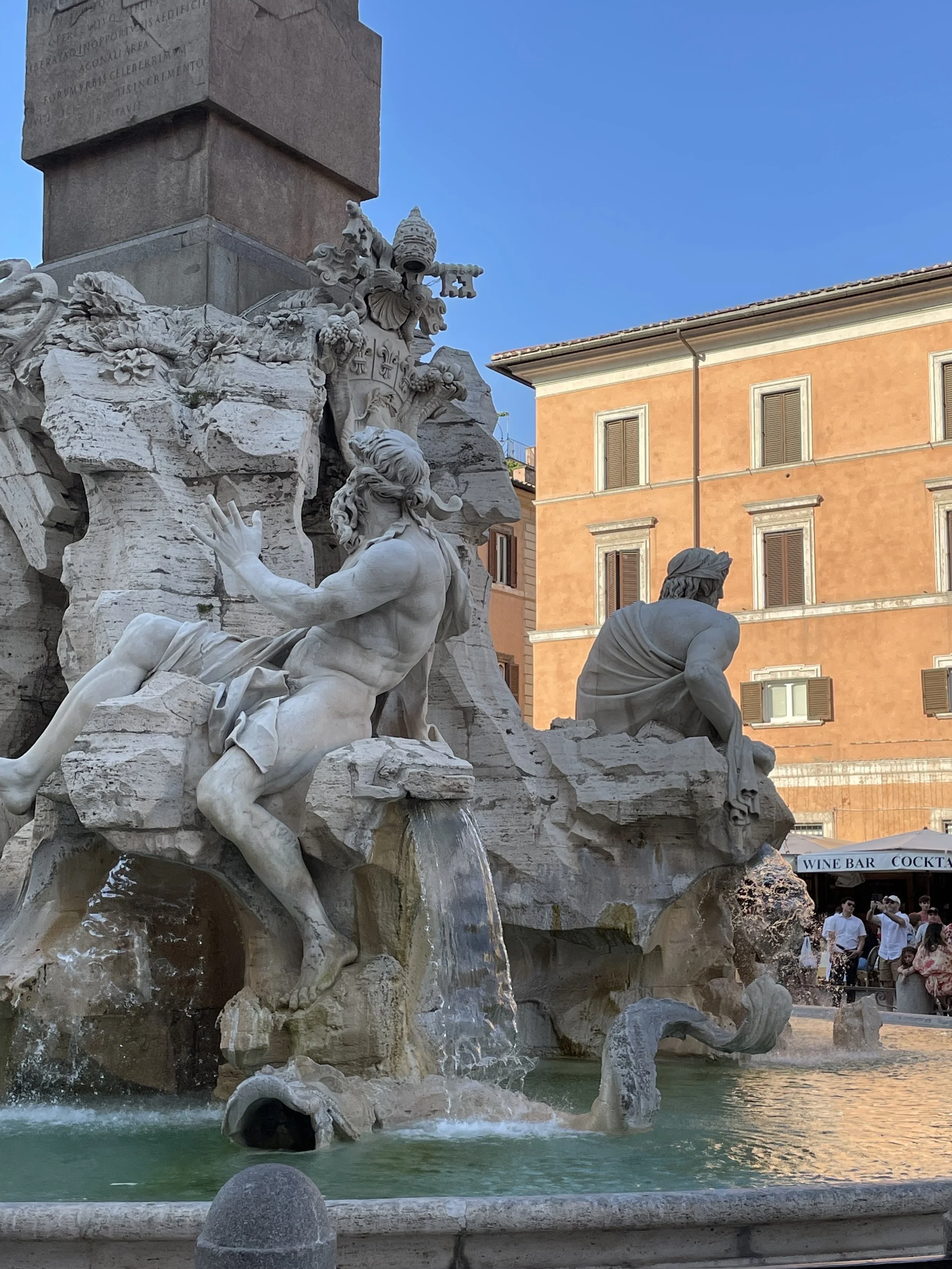
We booked it through Get Your Guide, and it was in Piazza Navona. After reading the reviews and seeing that the person leading the activity was a local chef, we booked it without a second thought.
📋 What You'll Find in This Post
Why We Booked a Cooking Class in Rome
What the Class Was Like: Step by Step
The Chef, the Venue and the Atmosphere
The Best Part: Sitting Down to Eat What We Made
Tips from Pedro and Karyna
Frequently Asked Questions
Why We Booked a Cooking Class in Rome
It wasn't a last-minute idea. We'd been watching videos of people making their own pasta by hand in Roman kitchens and thinking that this was exactly the kind of plan we enjoy when we travel as a couple: something you remember for the experience, not just for a photo in front of a monument. Plus, how many times will you get to say you ate pasta you made yourself in ROME???
Fresh egg pasta, the kind we made, has been a home staple in central Italy for centuries, long before the dried boxed pasta we know here existed. Learning to make it by hand, without a machine, is like feeling the pulse of a tradition that in many Roman kitchens is still made exactly as it was generations ago.
Doing this activity certainly made us appreciate this dish much more. We sometimes make it because it's quick, but for Italian culture it's a true symbol.
We looked at several options before deciding. There are pasta classes all over Rome, from one-hour express workshops to half-day experiences with a market visit included, and prices vary quite a bit depending on that. In the end we went with the one in Piazza Navona because it let us visit nearby monuments and at the same time be right where the workshop took place. The link is above, there are different options, and other workshops include different types of pasta and the famous tiramisu.
What the Pasta Class Was Like
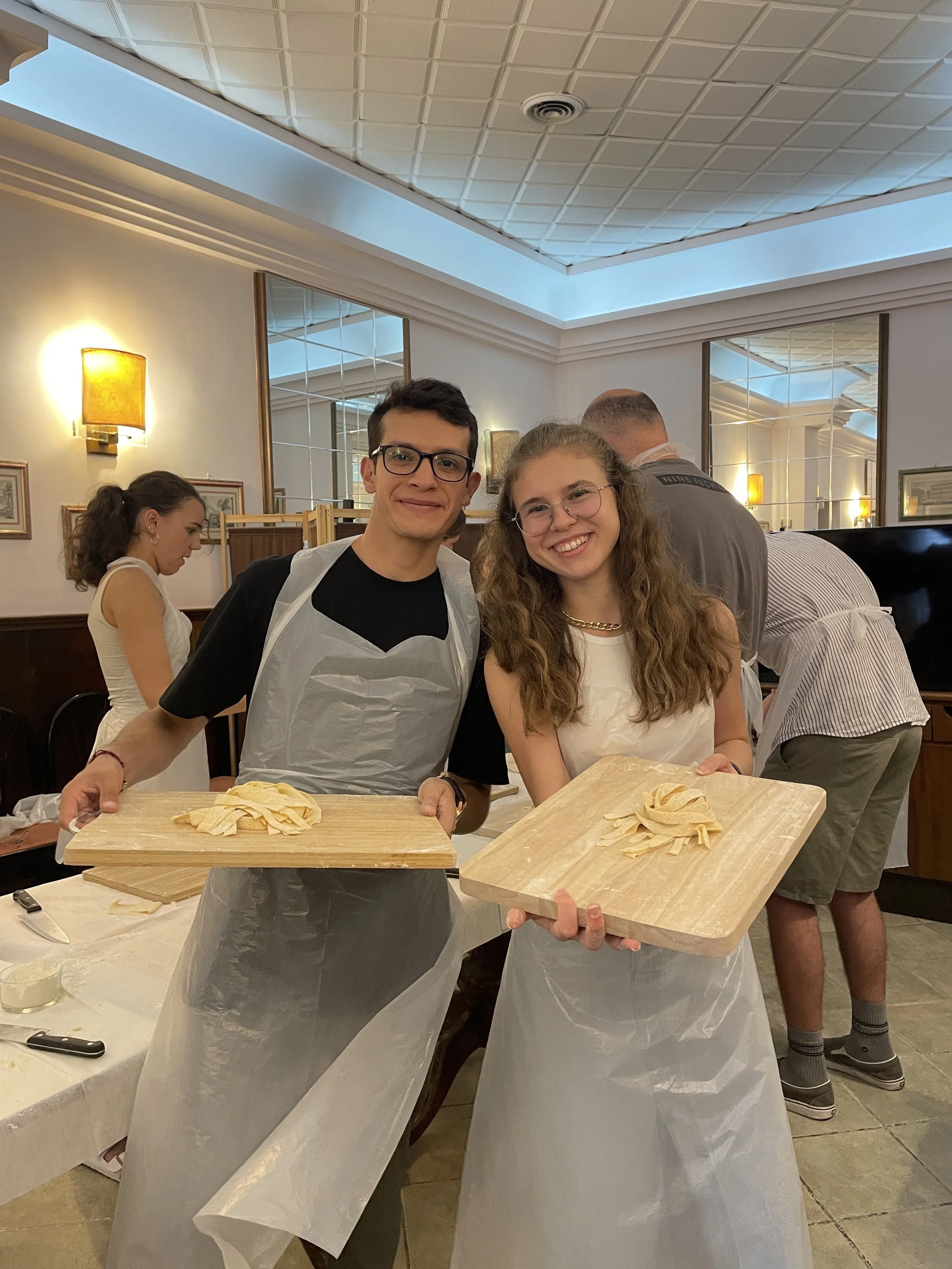
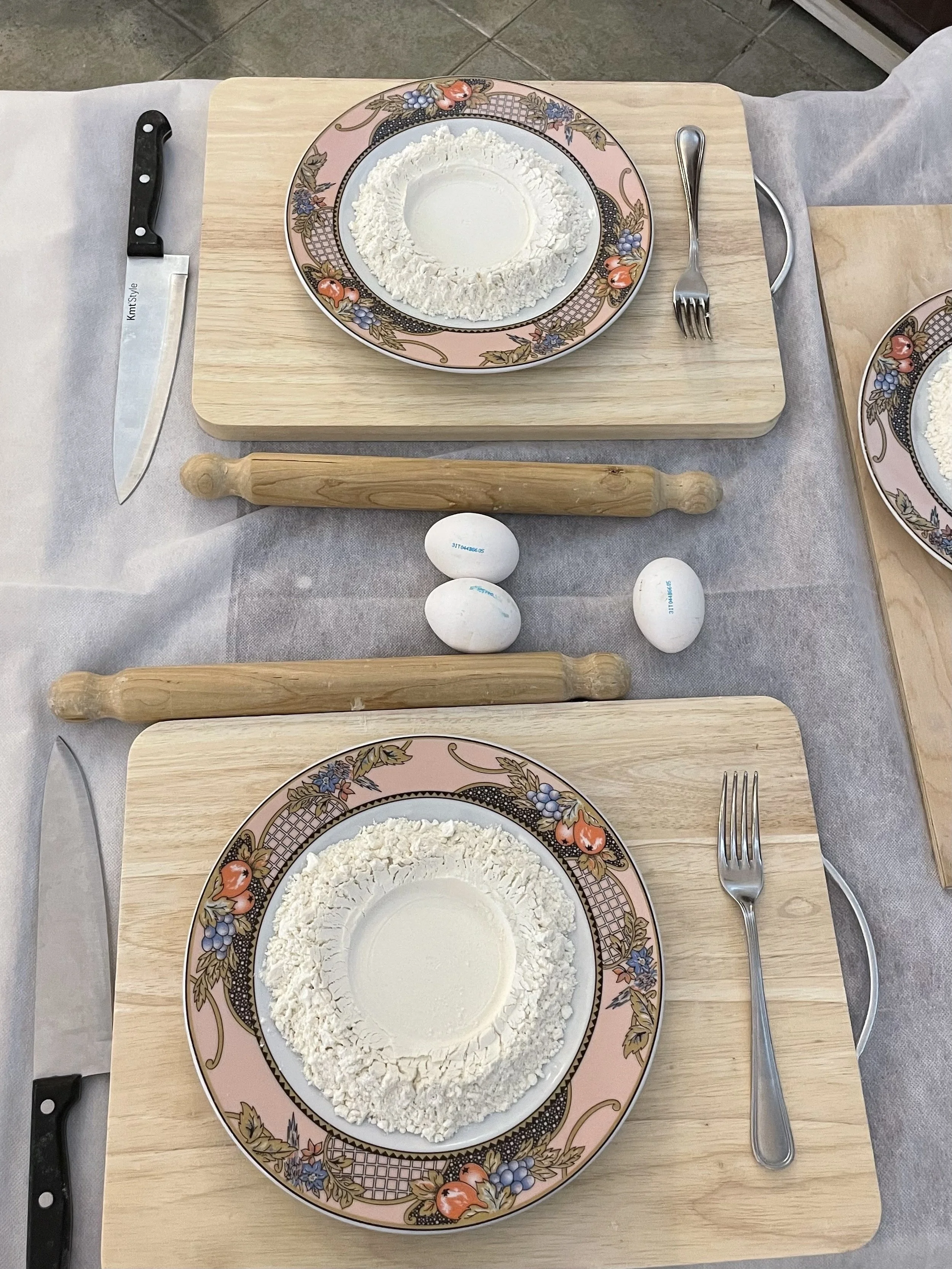
We started with our hands in the flour, literally. No watching the chef do it from a distance: each of us at our own station, with our own little mound of type 00 flour, the egg in the center and the instruction to incorporate it slowly without fear of getting messy. They gave us aprons to keep our clothes from getting stained.
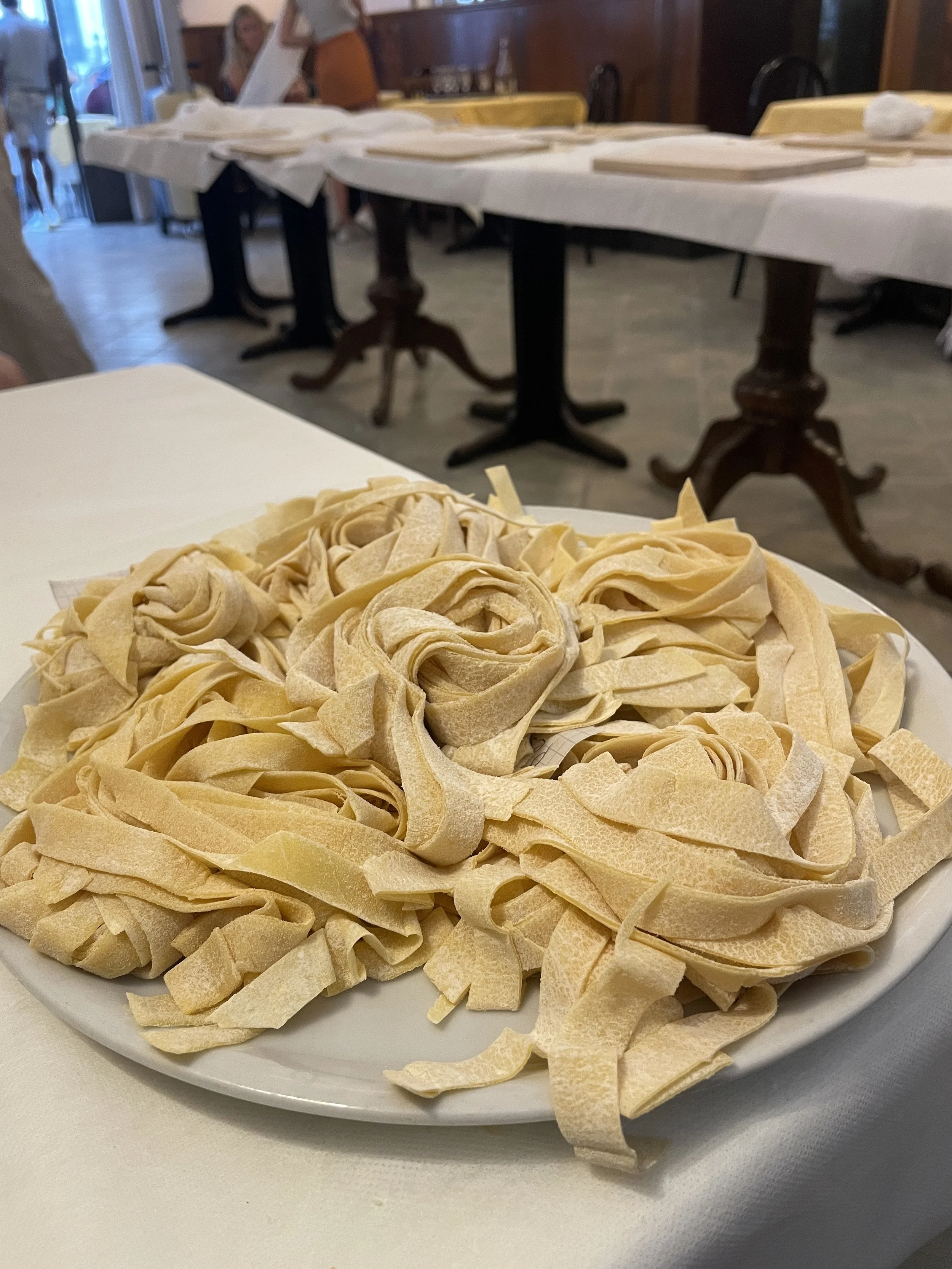
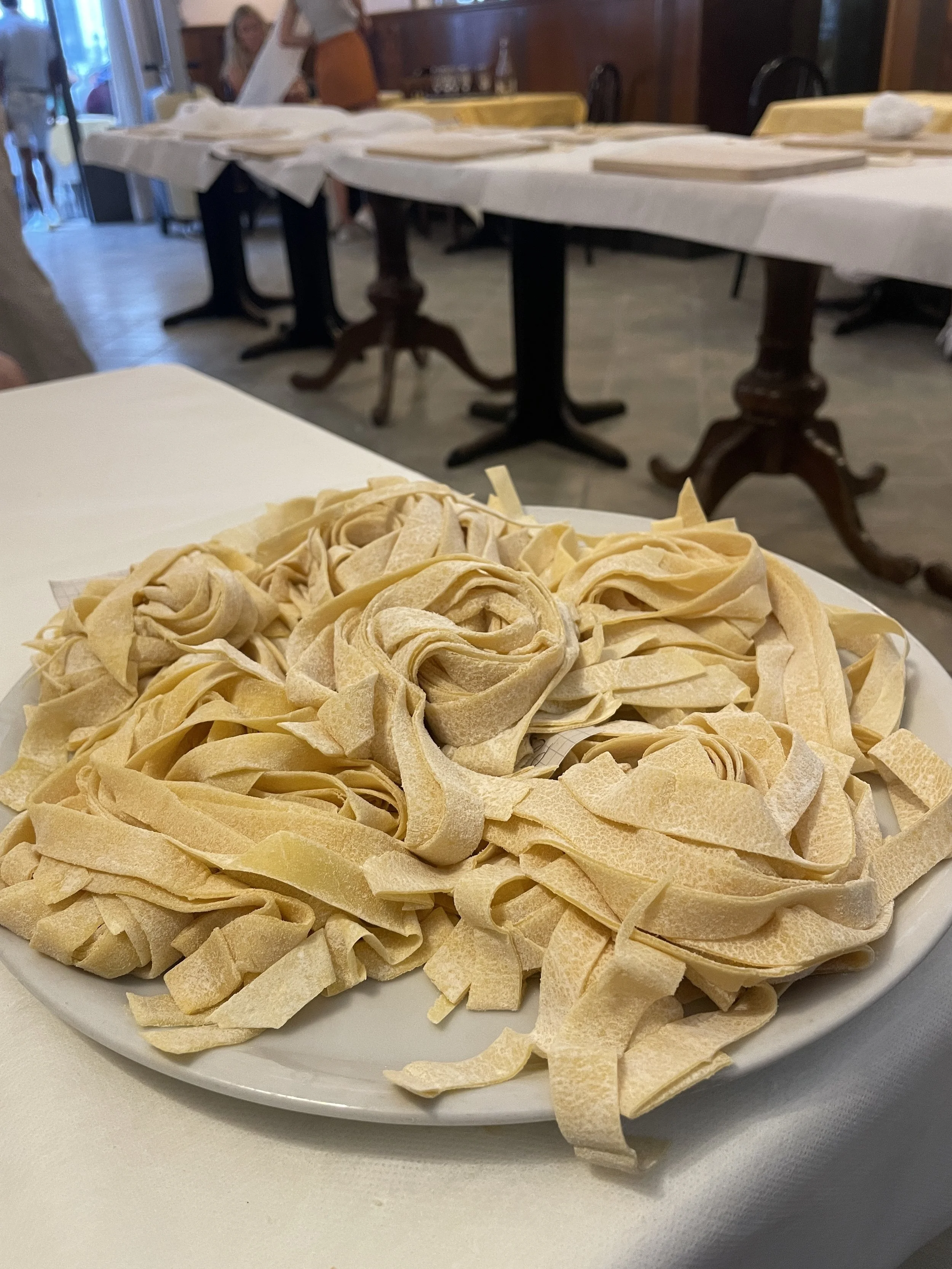
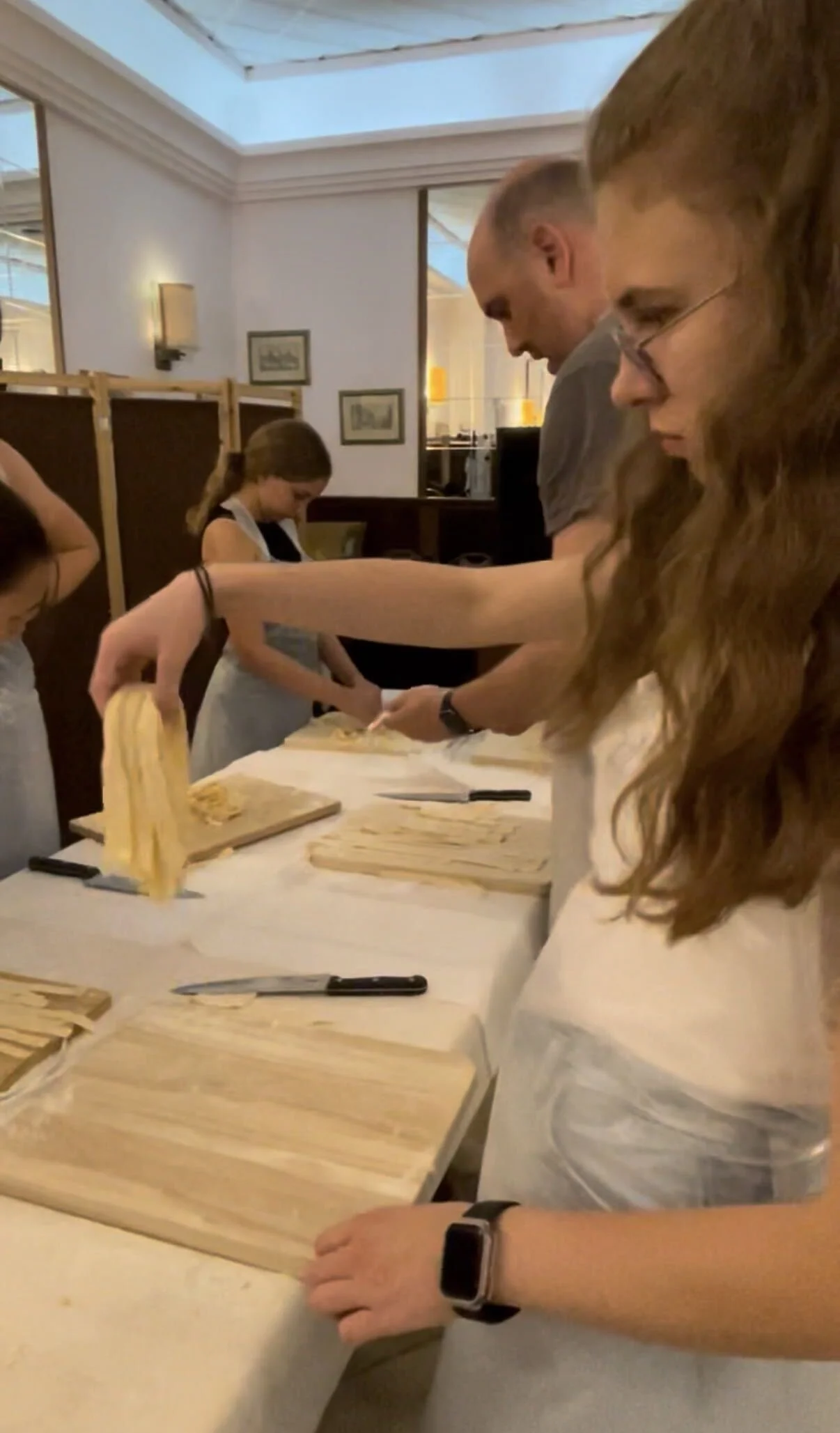
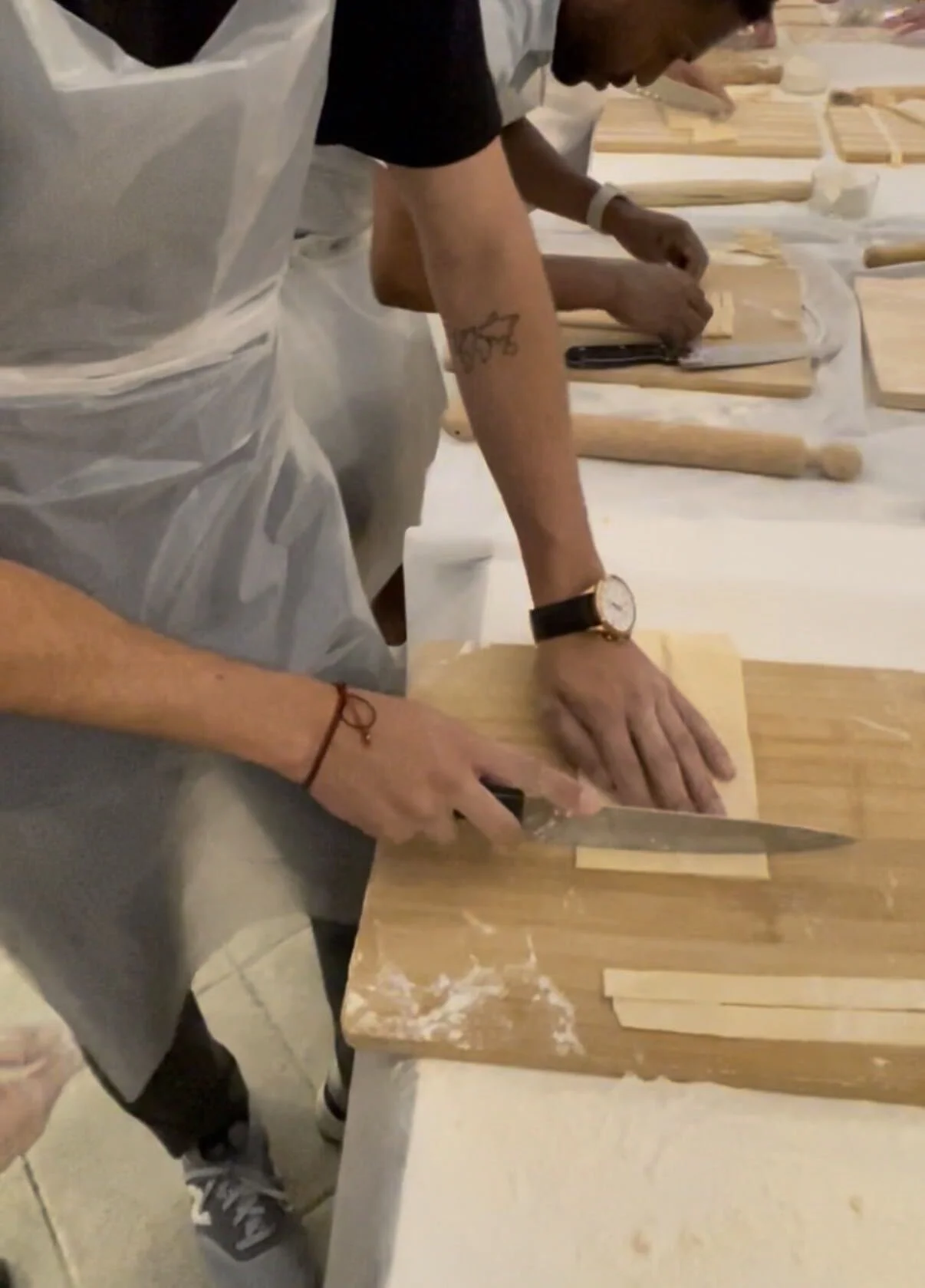
From there we moved on to rolling out the dough by hand on the wooden board until we had fettuccine, cutting it as precisely as possible while still making it obvious we'd done it ourselves. Finally, we chose the sauce we liked best from tomato and basil, cacio e pepe, or amatriciana for them to prepare.
The teacher was always on hand to help us, because there were clearly some tricky moments with the kneading, cutting, and so on.
The Chef, the Venue and the Atmosphere
The chef's experience put us at ease because it was clear she has done this many times. You can tell from the details: she corrects your kneading without making you feel clumsy, and if something doesn't turn out right the first time, they keep working with you until it does.
The venue is around Piazza Navona, in the heart of the historic center, so it's easy to combine with an afternoon of sightseeing. The atmosphere is more like a shared kitchen than a classroom: work tables close together, background music and the feeling of cooking in someone's home rather than in a formal course.
What we appreciated most is that you don't need to know how to cook beforehand. Nobody gives you odd looks if your first sheet of pasta comes out uneven or your fettuccine has a strange shape, and that's where you see the difference between a class designed for the photo and one designed so you actually take something learned home with you.
The Best Part: Sitting Down to Eat What We Made
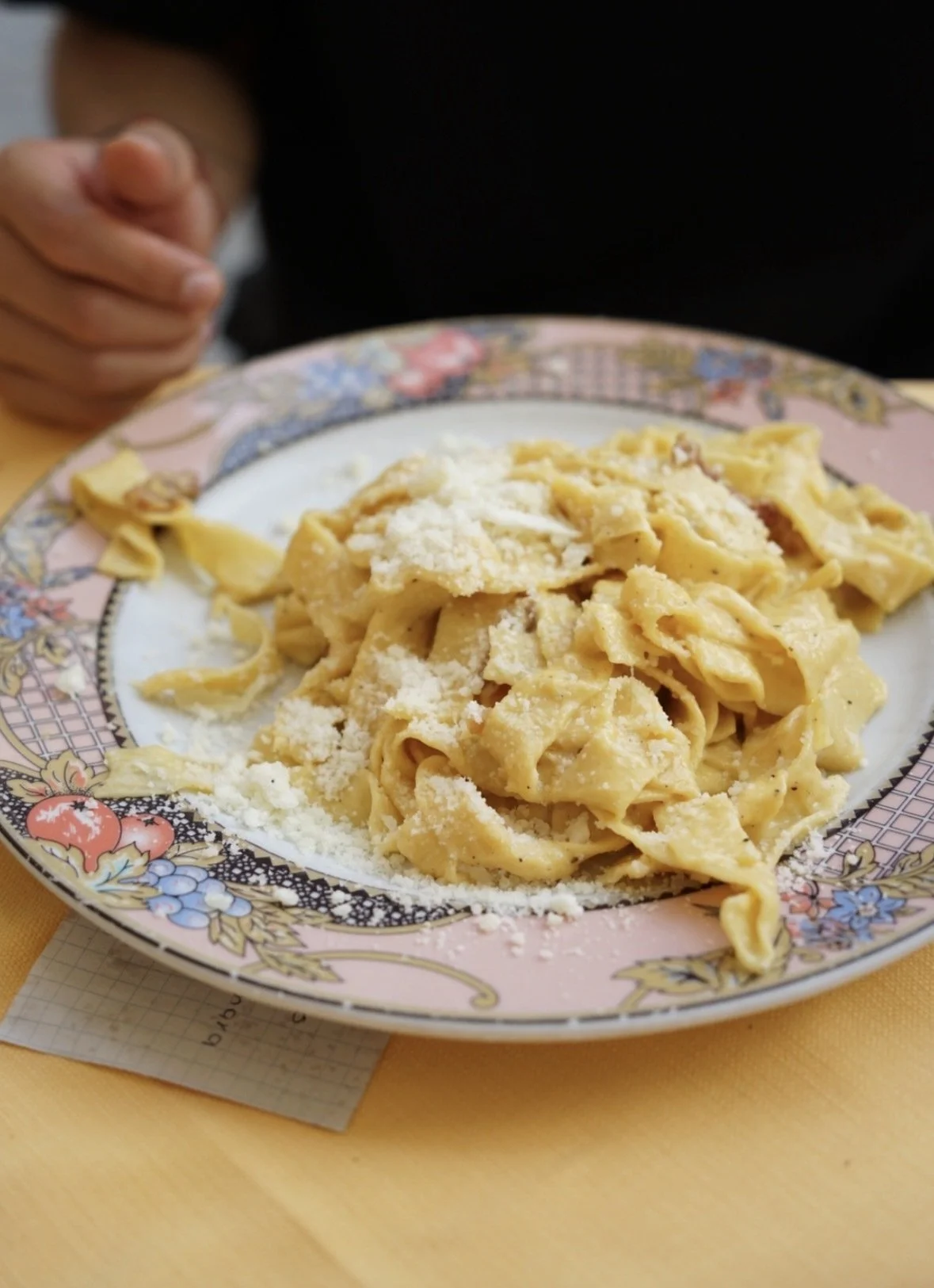
After almost 3 hours on our feet kneading, comes the part we appreciated most: sitting down to eat what you've made, served as in a restaurant rather than on a messy plate that comes from your own effort. Our fettuccine came out a vibrant green, with spinach in the dough, and with freshly grated parmesan on top it was better than we expected for our first time. For a moment we thought, this isn't for us, but it turned out it was, so we left feeling satisfied.
The class includes a glass of wine or a non-alcoholic drink, and for dessert limoncello or coffee. Water is also included, plus a recipe booklet to take home and try to repeat, which we've already done a couple of times since we got back.
We also got a certificate as "pasta experts."
💡 Tips from Pedro and Karyna
👕 What to Bring Comfortable clothes and closed-toe shoes. You'll be standing and kneading, and it's easy for flour or sauce to fall on you, so leave behind any clothes you'd hate to stain.
💰 Price and What's Included Ours cost around €40-55 per person, with drinks and food included. There are cheaper options and others quite a bit more expensive if they include a market visit or very small groups, so check carefully what's included in the price before comparing.
📅 When to Book Book in advance, especially if you're traveling in high season. They fill up fast, and cancellation is usually free up to 24 hours before, so you lose nothing by securing a spot as soon as you have your travel dates set.
🍝 Choose the Sauce Wisely If they give you a choice of sauces for the fettuccine, go for the one you least often cook at home. We chose cacio e pepe precisely because it never turns out well when we try it on our own, and it was worth learning from someone who knows how.
❓ Frequently Asked Questions
How much does a pasta class in Rome cost? Ours, for fettuccine, cost us €48 per person. There are classes in different locations.
How long is a cooking class in Rome? The experience lasts almost 3 hours, including the cooking part and the part where you sit down to eat what you've made.
What do you learn in a pasta class in Rome? In our case, how to make fettuccine by hand from scratch. Everything with a professional chef guiding you station by station.
Do you need to book a cooking class in Rome in advance? Yes, especially in high season. Free cancellation usually applies up to 24 hours before, so booking early carries almost no risk.
What should you bring to a pasta class in Rome? We went in comfortable clothes and closed-toe shoes. You don't need to bring anything special, the school provides the apron.
Where can you take a pasta class in Rome? We took ours in Piazza Navona, in the heart of the historic center, which makes it easy to combine with an afternoon of sightseeing in the area.
If you've caught the bug, here's the same class we took so you can book it on your next trip to Rome.
Have you ever taken a cooking class on your travels? Would you go for one in Rome? Tell us in the comments. 👇
